What happens to a rejected applicant in your digital journey?
A customer applies for a ₹3 lakh personal loan. She completes the entire process, including KYC, Account Aggregator, and bureau fetch. A few minutes later, she receives the standard system rejection: “We are unable to approve your application at this time.”
By the next morning, she has borrowed ₹2 lakh from a competitor on the exact same credit profile.
The original decline was warranted and policy compliant. At ₹3 lakh, her FOIR exceeded the policy limit for that tenure. The failure was what happened next: nothing.
The lender closed the file, even though they had an active ₹1.5 lakh policy she qualified for, along with a gold loan branch two kilometers from her home. Instead of rerouting a high-intent applicant to an eligible product, the system let her walk to a competitor.
A rejection is still treated as the end of the file
In many journeys I’ve seen, the decline message is the last thing a rejected applicant receives from the lender. The high-intent lead just sits in your LOS until marketing sends a generic retargeting email weeks later, long after they’ve already borrowed elsewhere.
To be fair, cross-selling used to be hard because every product ran in its own silo. If someone failed a personal loan, checking them for a gold or business loan meant starting from scratch, pulling bureau data again and getting an underwriter to review the file manually.
Today, three things have changed:
- Account Aggregator data and bureau reports now arrive in seconds, so the file is complete before the decision is made,
- AI decisioning can run one file against several policies in parallel, almost instantly,
- And the conversation has moved to WhatsApp, where the next lender is one tap away
What one month of declines costs
If a mid-sized NBFC running a digital personal loan journey processes 100,000 completed applications a month at a 40% approval rate, it declines 60,000 borrowers. Between customer acquisition, e-KYC, bureau pulls, and Account Aggregator data, processing a completed file costs roughly ₹400. That is ₹2.4 crore burned every month on applicants that didn’t convert.
Now look at the recovery potential. If even 15% of those declined files qualify for a smaller ticket or a gold loan, that’s 9,000 eligible borrowers. Converting just a third of them while they're still in the chat adds 3,000 loans and roughly ₹36 crore in monthly disbursals, with nearly zero added acquisition cost.
Keeping the rejected applicant in your ecosystem
- A decline might mean a wrong product, not a bad borrower
Someone might not qualify for a ₹3 lakh personal loan on FOIR, but qualify easily for ₹1.5 lakh over a longer tenure, or a gold loan instead. Check those options before you close the chat.
- Evaluate once, against every policy
You’ve already paid to bring the applicant in and pull their data, so checking them against a few other policies, with borrower’s consent, costs practically nothing extra. Running multiple policies at the same time used to be too slow to pull off, but AI decisioning makes it easy to do in a few seconds.
- Give them alternative offers on the spot
A borrower’s intent is at its peak right when they’re applying. They want money today, and if you turn them down, they’ll take that intent to another lender within minutes. Reaching out weeks later won't make a major difference; the alternative offer should land before they close the chat.
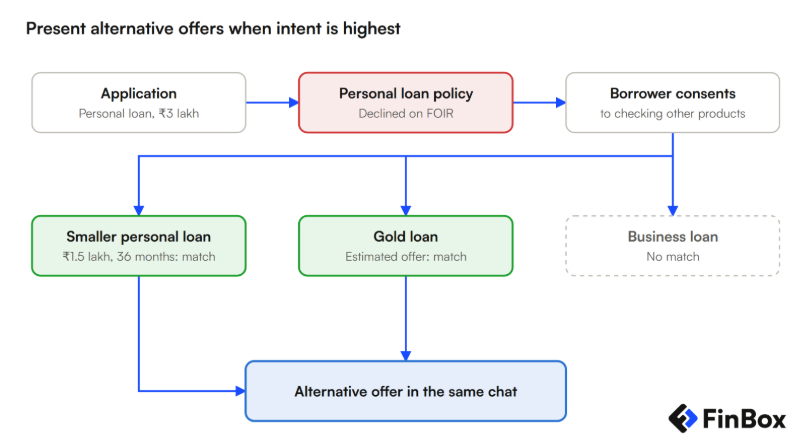
Under RBI and DPDP rules, consent given for a personal loan can't be stretched to other products, which means you have to ask again. Asking for consent at the point of rejection works in your favour, giving you the right moment to present alternative offers.
Turning decline into disbursal on WhatsApp
This sounds straightforward in theory, but stitching together consent, multi-policy decisioning, and immediate routing inside a live chat is difficult to execute. FinBox Atlas Flow manages that entire sequence.
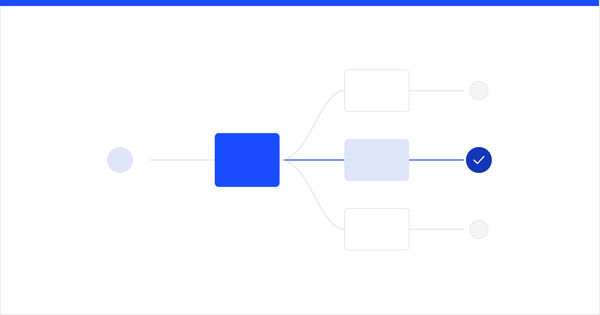
When a loan application is rejected, Atlas Flow shares the reason, asks for consent to check other options, and queries your engine against your other policies. If the applicant qualifies, the new offer appears in a WhatsApp chat, without redirecting them to a clunky web form or making them download an app.
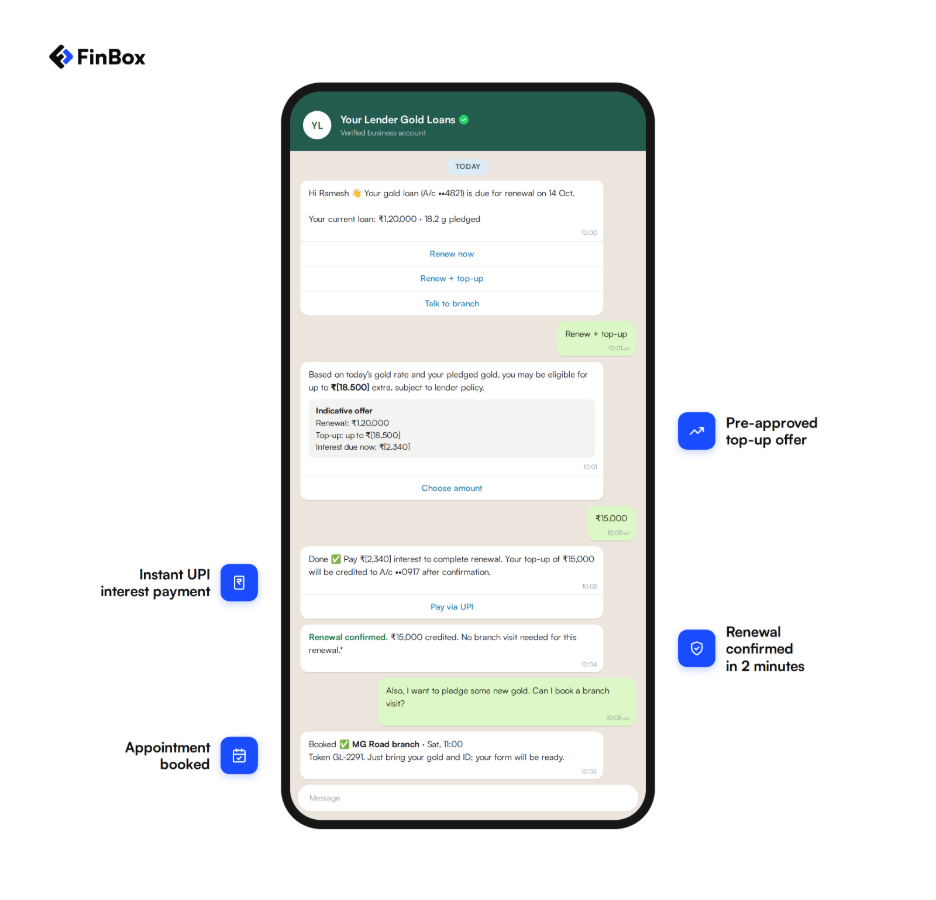
If that alternative is a gold loan, the onboarding starts immediately in the chat. The customer completes KYC and books a branch visit right in the thread, so counter staff spend their time on weighing and assaying the collateral.
I’ll leave you with this question: do you check declined applicants for other products? And if yes, how long does it take to reach out to them?
Until next time,
Srijan
Co-founder
FinBox