CRED spent years, and a lot of money, building one thing — a premium, invitation-only brand for people who pay their card bills on time. Then it expanded into lending well beyond that original wedge.
I wrote about this a while ago in FinTech returns inside the box: the specialists were slowly giving up on being specialists, and the industry was drifting back toward doing many things under one roof. That drift has only sped up since. And it has left one kind of company badly exposed — the platform still earning its entire credit revenue from a single product.
A product is a position
If your platform distributes one kind of credit, your entire revenue rides on how that one category is doing in any given quarter. When the category grows, you grow with it. When lenders pull back from the category, nothing else on the shelf is earning.
And the exit isn't your call. Lenders decide when a category stops being worth funding.
This is how it plays out
ZestMoney had 17 million users and 27 lending partners — on paper, a textbook distribution story. Underneath all of it sat one product category: BNPL and small-ticket unsecured loans.
Between 2022 and late 2023, three separate interventions converged on that one category — the digital-lending guidelines, the ban on loading credit lines onto prepaid instruments, and the November 2023 hike in risk weights on unsecured credit. Twenty-seven lenders couldn't help. The business was surviving almost entirely on small-ticket BNPL and personal loans, both hit by the same set of rules. Lending partners stepped back from fresh exposure, and by December 2023 the company was winding down.
Similar platforms of the time had this and other problems too — a collapsed acquisition deal or two, high delinquencies, a brutal funding winter. But the structural fact under the wreckage is the one worth keeping: most of the players built enormous distribution on top of a single cyclical product, and when the cycle moved, it had nowhere to go.
Twenty-seven lenders is not diversification if all twenty-seven are funding the same thing.
Compare that with Paytm's quarter in the same clampdown. When the risk-weight hike landed, it cut its small-ticket postpaid product — the segment most exposed — and leaned on merchant and personal loans instead. Same regulatory shock, but the shelf absorbed it. That's the whole difference a second product makes: it turns a shutdown decision into a mix decision.
BNPL shakedown wasn’t a one-off
The November 2023 risk-weight increase deliberately spared housing, education, vehicle and gold-backed loans, and landed squarely on unsecured credit. The book did exactly what you'd expect. By Fitch's numbers, unsecured personal loans had grown at a 22% CAGR in the three years to FY24; in the half-year after the hike, growth slowed to 11% year-on-year.
Two and a half years on, the rotation has fully played out. RBI's sectoral data for the twelve months to May 2026 shows loans against gold jewellery up 105% year-on-year, housing at 10.9%, credit cards at 1.3%, and consumer durable financing contracting. The unsecured cheque became smaller, rarer and more selective, and the money went to exactly the categories the risk weights had left alone.
Platforms carrying a broader shelf rode that rotation by routing the customers they already had toward the products lenders still wanted to fund. A single-product platform watched its one category shrink, with no second act to reach for.
Now, the obvious objection: gold and housing are branch businesses. The gold boom went to Muthoot branches and bank home-loan desks, not to digital platforms, and telling an LSP to chase it is telling them to chase demand they can't structurally capture. That's true — and it's also not the instruction.
What the data proves is correlation: secured and unsecured credit move on different cycles. Which secured product you stock depends on what your distribution can carry.
For a digital platform, that shelf exists — loans against mutual funds run a fully digital journey on market-linked collateral, loans against property and vehicle refinance work in assisted-digital models, and even gold now has doorstep and phygital variants. Nobody should read this as a case for selling gold loans. The case is for carrying at least one product whose funding doesn't dry up when unsecured credit does.
Why a credit card won't save you
The lesson most people take from this is ‘add more products.’ Then they bolt a credit card next to a personal loan and call it diversification.
It isn't. Both are unsecured, move on the same cycle and got hit in the same clampdown — card risk weights went up in the same November 2023 circular. Adding a second unsecured line to an unsecured book just doubles the same bet in a different wrapper.
The only breadth that protects you is breadth across things that don't move together — secured alongside unsecured. That's the exact split that diverged over the last two years. If you're going to widen the shelf, widen it in the direction that offsets your first product, not the one that piles onto it.
Isn’t focus good for a business?
Here's the fair objection. CRED and Paytm got big by doing one thing obsessively well. Isn't a crowded shelf just how you end up mediocre at all of it?
It's worth taking seriously. And the answer is that focus and diversification are doing two different jobs. Focus is how you win a customer: one sharp product, one clear promise, a brand people remember. Diversification is how you keep the revenue from that customer alive after the cycle turns against your first product.
The specialisation wins you the audience. Widening the shelf is what turns an audience into a credit business that survives a bad year.
The bill you pay even in good years
Set the downturn aside for a second, because a single product costs you even in a good market. It costs you the two cheapest kinds of growth you have.
The first is the next loan. A borrower's needs move over time — a personal loan now, a loan against property when they upgrade the house, a gold loan when something breaks. With one shelf you serve exactly one of those moments, then the relationship stalls, and you've already paid full price to acquire that person.
The second is data. When you only ever see how a borrower behaves on one product, your read on them is shallower than a platform watching the same person across three or four.
I argued in Lead quality is the new capital that the LSPs who last will be the ones who can prove, across real vintages, that their cohorts outperform what a lender could source alone. You can't build that proof out of one product's worth of performance.
Nobody stays single product on purpose
None of this means single -product platforms are lazy. A second category is a genuine build. Secured lending needs collateral handling, a different KYC flow, different disbursal rails, and its own specialist lenders. Every category you add is another multi-quarter engineering project with its own integrations — which is why most platforms decide once, early, to do one thing and leave it there.
So a single product is usually a rational answer to what the second one costs to stand up. That's the good news, actually. Build cost is an infrastructure problem, and infrastructure problems have fixes that strategy problems don't.
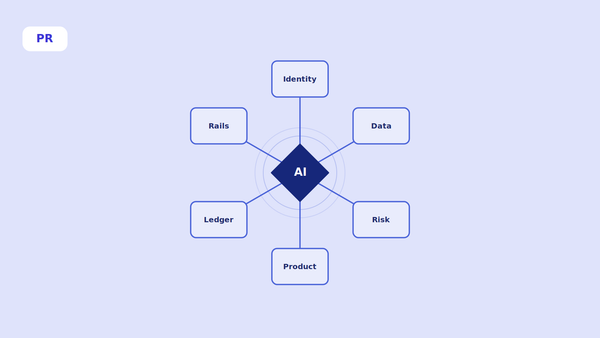
This is, honestly, a large part of why Prism exists. We kept meeting platforms that wanted a second category and couldn't justify the build, so we laid the rails once — the lender integrations, the product journeys, the compliance plumbing — for everything from personal and business loans to loans against mutual funds, property and gold. A platform that decides to widen its shelf now switches a category on with the lenders who fund it, in about two weeks instead of the quarter a direct integration takes. The second product stops being a line on the engineering roadmap and goes back to being a business call.
The timing is the whole game
Which turns this into a timing decision, and timing is the part most platforms get wrong.
The moment to add the second, uncorrelated product is while the first one is still working — while you still have the revenue, the team's attention, and the room to build calmly. Wait until the cycle turns and you're standing up lending infrastructure in the middle of a downturn, which is the hardest and most expensive time to begin. It's roughly where ZestMoney was when it went looking for a second act it never got to build.
So if you take one thing from this, take this: widen the shelf in a good market, because nobody has ever built their second product line in the middle of a bad one and enjoyed it.
Specialisation had a good run. It produced some of the best-known names in Indian fintech and taught a generation of platforms how to acquire users cheaply and well. But the part of a credit business that has to survive a cycle was never going to ride on one product.
Every cycle in memory has eventually turned against somebody's only product. The next one will too. What's worth asking now, while things are calm, is whether your platform has anywhere else to earn when it does.
Until next time,
Rajat